
Psychology of App Designing: In today’s highly competitive digital ecosystem, creating a functional mobile app is no longer good enough. Users expect applications that are instinctive, visually attractive, emotionally engaging, and thus easy to use. This is where the psychology of app designing comes into play. App design psychology focuses on understanding how users think, feel, and behave while interacting with an application—and then taking those insights to design better user experiences.
Successful applications are never an accident. They systematically teeter a fine balance between behavioral psychology, cognitive science, and UX principles. This is the reason why all leading enterprises get their applications crafted from the Best App Development Company in Lucknow, seasoned Mobile App Development in Lucknow teams, and accomplished Best UI/UX Designers in Lucknow to make users love and come back to using them over and over again.
This comprehensive guide to the psychology behind app designing describes key principles, practical techniques that work, business benefits, and why psychological design is so important for any app looking to achieve long-term success.
Understanding the psychology behind designing apps
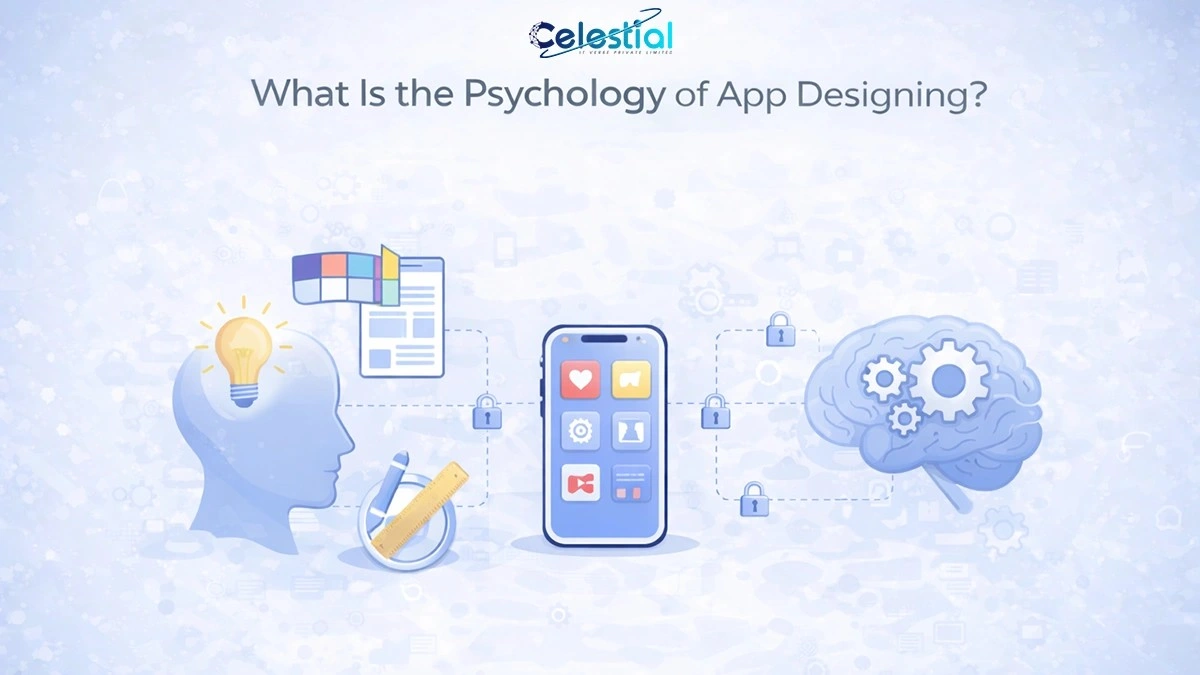
Psychology in app design refers to the accommodation of patterns in human behavior, cognitive processes, and emotional stimulation in designing user-friendly mobile applications that are appealing. It concerns how the user perceives information, makes decisions, and interacts with a digital interface.
Key psychological factors include:
- Attention and focusing
- Memory and recall
- Motivation and Rewards
- Emotions and Trust
- Decision-making behavior
A well-designed application aligns with how the human brain works, using less effort and raising satisfaction.
Why Psychology Matters in App Design
Apps are for humans, not computers. When an app seems confused, overwhelming, or unintuitive, the users will abandon it, often in a matter of seconds.
Here is why psychology is important:
- Users form first impressions in milliseconds.
- Cognitive overload leads to frustration.
- Loyal Heart: Emotional connections will drive loyalty.
- Simplicity improves engagement and retention
This is because companies collaborate with the Best App Development Company in Lucknow and Best Web Developers in Lucknow for the sake of functionality, yet emotional appeal.
Core Psychological Principles Used in App Design
1. Cognitive Load Theory
Cognitive load is the mental effort one needs to use an application. If users are obliged to process too much information at once, they get overwhelmed.
How designers apply it:
- Clean, minimal interfaces
- Clear navigation paths
- Limited choices per screen
- Progressive Disclosure
Lowering the cognitive load is a method of improving usability and enhancing the ratio of task completion.
2. Hick’s Law (Choice Overload)
Hick’s Law says that a user takes longer to decide if they have more options.
The design of the app is
- Limit menus
- Emphasize main actions
- Use visual hierarchy to direct attention
This principle holds especially true in e-commerce app development in Lucknow because too much of an option reduces conversions.
3. Fitts’ Law Ease of Interaction
Fitts’ Law describes that larger and closer interface elements are easier to tap.
Design implications:
- Large, well-spaced buttons
- Easy-to-reach navigation areas
- Thumb-friendly designs
This increases the ease of use and greatly reduces the likelihood of user mistakes that are common in mobile devices.
4. Visual Hierarchy and Attention
Users naturally scan in predictable patterns. Visual hierarchy guides their eyes to the most important elements first.
Techniques include:
- Size and Color Contrast
- Strategic use of white space
- Clear typography hierarchy
The following techniques are put into practice by some of the most experienced and best UI/UX designers in Lucknow to make intuitive layouts.
Emotional Psychology in App Design
1. Color Psychology
Colors can evoke emotions and drive user behavior:
- Blue builds feelings of trust and security.
- Green can be seen to suggest growth and success.
- Red creates urgency
- Yellow carries the vibe of positivity and energy.
The reason behind this is that picking the right color palette itself is very important for brand perception and emotional engagement.
2. Micro-interactions and Feedback
Instant feedback gives users the feeling of being in control. Small animations, active button responses, and success messages will give instant feedback.
Examples:
- Button Ripples
- Loading animations
- Confirmatory messages
Interacting with them creates positive affective responses; the users are more satisfied.
3. Trust and Credibility Signals
People are more likely to interact with and be involved with applications that they can trust.
Trust-building elements include:
- Consistent Design
- Clearly stated privacy policies
- Secure payment indicators
- Professional visuals
This is why businesses prefer the best app development company in Lucknow that understands both technical and psychological trust factors.
Behavioral Psychology and User Engagement
1. Habit Formation
Successful applications create habits by encouraging repeat usage.
Techniques include the following:
- Push notifications—when used judiciously
- Daily rewards or streaks
- Personalised content
- Habit-forming design increases retention and lifetime value.
2. Motivation and Rewards
Such gamification elements include badges, points, or progress tracking that motivate users to do something.
This is widely used in:
- Fitness apps
- Learning platforms
- E-commerce loyalty programs
Motivation in behavior has become a prime focus of modern mobile app development in Lucknow.
Read Also: What is Quality Assurance?—Complete Guide
3. Social Proof
When customers see more people using an app, they gain more trust in the app.
Examples:
- Ratings and reviews
- Testimonies
- User activity indicators
- Social proof reduces hesitation and increases the rate of adoption.
Psychology of UI versus UX Design
While UI and UX are closely related in many aspects, they differ in their psychological focus:
- UI stands for User Interface, and it means visual appeal, colors, typography, and layout.
- UX is about how users flow with navigation, the feelings they go through, ease of use, and whether they are satisfied or not.
A successful application requires both, and that is the reason why businesses seek the best web developers in Lucknow, coupled with the best UI/UX designers in Lucknow.
Psychology in E-Commerce App Design
At a time when user decisions in e-commerce app development in Lucknow directly influence revenues, psychological design has come to play a very important role.
Key strategies include:
- Scarcity messages: Limited stock
- Urgency-scarcity (time-limited offers)
- Simple checkout processes
- Trust badges, secure payments
If these are applied appropriately, they further aid in increasing the conversion rates tremendously.
Common Psychological Mistakes in Application Design
Avoiding these mistakes is as important as the application of best practices:
- Overloading the screens with information
- Inconsistent navigation
- Poor color contrast
- Too many notifications
- Disregarding user input
- To keep away from this pitfall, professional teams in the Best App Development Company in Lucknow conduct usability testing.
Business Benefits of Psychology-Driven App Design
Investing in psychologically informed app design can bring measurable business results:
- More user engagement
- Improved retention rates
- More conversions
- Reduced churn in users
- Stronger brand loyalty
That makes it a strategic differentiator for a company, not just a design trend.
Conclusion: Psychology of App Designing
Designing an app is about the psychology that goes into the making of a successful digital product. Understanding how users think, feel, and behave informs companies how to make their applications intuitive, engaging, and emotionally fulfilling. From minimizing the cognitive load to trusting and creating habits, psychological principles have a direct impact on user satisfaction and business growth.
Partnering with the best app development company in Lucknow, experienced teams in mobile app development in Lucknow, and skilled Best UI/UX designers in Lucknow ensures that your app is technically strong as much as it is deeply user-centric. In the competitive app market, it’s the psychology-driven design that separates average apps from the truly successful ones.
Frequently Asked Questions (FAQs)
1. What is the psychology behind designing apps?
It is the application of behavioral and cognitive psychology in the design of mobile applications to develop an application that would be user-friendly and engaging.
2. Where and why is psychology important in UI/UX design?
It also helps designers to know user behavior, reduce friction, and increase engagement and retention.
3. Does design based on psychology enhance the success of an app?
Yes, apps with psychological design features tend to exhibit better usability, trust, and ultimately higher conversion rates.
4. Is psychology important in e-commerce applications?
Of course, psychological triggers directly affect purchase decisions and customer loyalty.
5. Who should handle psychology-driven app design?
Experienced UI/UX designers and developers of a professional app development company.
Looking forward to crafting a mobile app loved and trusted by users? Partner with the best app development company in Lucknow that understands the psychology behind every successful app design.
From strategy and UI/UX to development and optimization, expert teams in mobile app development in Lucknow help transform your idea into a high-performing digital product. Collaboration with the best UI/UX designers in Lucknow & the best web developers in Lucknow, along with teams, allows you to create an app that not only looks great but also delivers wonders on user experiences and business results. Celestial IT Verse